The Industrial Designer’s Ghost
# What Software Can Learn from a Furnace Full of Money
In 30 seconds
Slow down at the right doors.
Low-cost software iteration is a superpower—until you treat an irreversible decision like an agile two-step.
Physical product design bred productive paranoia because mistakes meant a furnace full of money.
Bypassing design on a critical system is a one-way door disguised as an agile sprint.
A design leader’s job is to stand at every doorway and ask whether we can get back through.
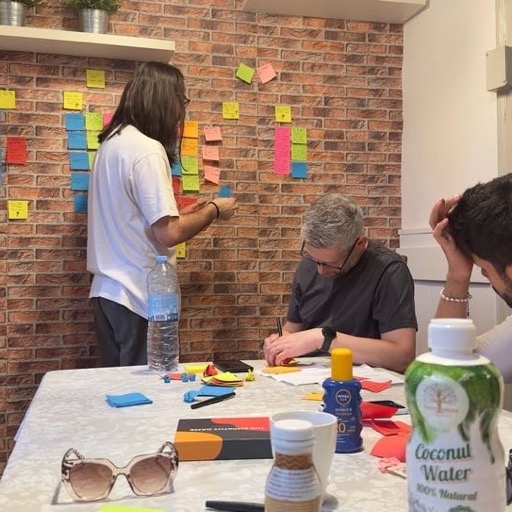
When I started my career, product designers designed physical products. As a snotty-nosed designer fresh out of uni, I had a lot to learn about... everything. The whole team was in one studio, an old Victorian building tucked away behind the main warehouse. We were largely out of sight and out of mind of the rest of the company, which meant we were pretty much left to our own devices to get on with deep design work. There was no army of product managers making tickets; designers owned the work. Properly. They owned the design and the outcome of their decisions.
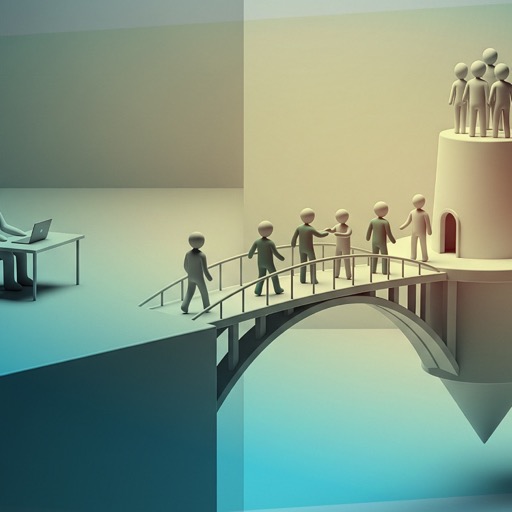
And in that world, there was a concept that haunted every project: the "one-way door."
It’s a choice that, once made, is nearly impossible to reverse. For a software team deciding on a new feature, these are rare. For an industrial designer, they were the only doors we had.
Signing off on the final drawings for a physical product was the ultimate one-way door. The moment you walked through it, you were committing the company to spending a fortune on building thousands of pounds worth of hardened steel moulds, the 'tooling'. There was no going back. Getting it wrong meant you had just created a very, very expensive mistake.
This reality, the constant presence of that one-way door, bred a certain kind of mindset: a healthy, productive paranoia. You were forced to do the deep, upfront thinking because you only had one shot to get it right.
Moving fast vs breaking things
“Move fast and break things” is a wonderful philosophy if you’re rating sandwiches, but catastrophically irresponsible if you’re designing software for the crew of a supertanker.
Then came the software revolution, a world built entirely on "two-way doors." Its central belief is that failure is cheap. Don't like how a feature works? Ship a patch. Found a bug? Push a hotfix. This is a monumental advantage over the old world, where a mistake meant a furnace full of money. But this low cost of failure has bred a culture where the deep, rigorous thinking that was once mandatory is now often seen as a bottleneck. An entire generation of designers has been raised on the Silicon Valley mantra of "move fast and break things."
I saw this firsthand not long ago. Someone, under immense pressure to get stuff done and with the best of intentions, decided it would be fine to build a new payroll system by completely bypassing the design team. And we're not talking about some minor internal app; this was payroll, arguably one of the most critical tools a company has. The product manager would write the tickets, the engineers would build them, and this, apparently, would be the fastest way to tick the box that says "we have this feature." They treated it like a two-way door. The result, predictably, was a catastrophe. A confusing, unusable system that created more problems than it solved. The things they broke were people's pay slips and their trust in the company's tools. It was a one-way door decision disguised as an agile two-step.
Reversible
Ship a patch, push a hotfix. Low cost of failure—ideal for small experiments.
Irreversible
Hardened steel moulds, broken employee trust, or a Chief Officer in a narrow channel.
The expensive aftermath
And the true cost wasn't just the initial build. It was the endless, expensive aftermath: the extra training, the reams of documentation trying to explain a system that was fundamentally broken, and the ongoing support tickets from frustrated employees. It was an iceberg of a problem that could have been avoided, but which the design team is now, of course, being asked to fix. The mind boggles, it really does, how a room full of genuinely clever people could think this was the fastest way forward. But then you realise it’s because they don’t actually know what design is. To many, we’re still just the people who add the visual polish at the end. The colouring-in department, called in after all the 'real' decisions have been made. And when that’s your worldview, your measurement for success becomes completely broken. The goal wasn't to solve a problem for our employees; it was just to launch the feature. Tick the box. Wahoo. We can all pat ourselves on the back. We did an amazing job.
And so, the ghost of the industrial designer haunts the modern agile ceremony.
“Are we absolutely sure this is a two-way door?”
“Have we truly considered the consequences for our employees, or are we just trying to tick a box?”
“Are we truly ready to ship, or if we're just shipping because the calendar says it's the end of the sprint?”
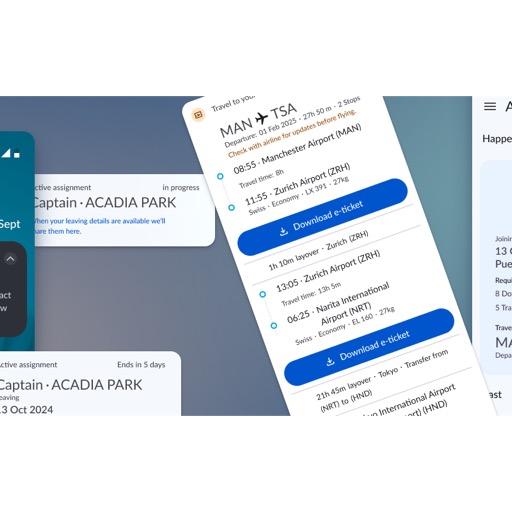
In our high-stakes world of maritime shipping, a thoughtless software decision can have irreversible, one-way-door consequences. A confusing interface doesn't just lower engagement; it could lead a sleep-deprived Chief Officer to make a critical error in a narrow channel. We have to remember that some things, once broken, cannot be unbroken.
The job of a modern design leader, especially in an industry like ours, is to be that ghost in the machine. It is to infuse the speed and flexibility of the software world with the rigour and profound sense of consequence from the world of atoms. It’s to stand at every doorway and force the team to consider, just for a moment, whether they’ll be able to get back through.
Because in the real world, some failures are much, much more expensive than others.
What’s your biggest one-way door?
What's the biggest "one-way door" decision you've ever had to make in a project? I'm interested to hear about the moments that force us to slow down and think.