Architecting a Hybrid Chapter
# How We Balance Deep Domain Focus with a Cohesive Design Culture
In 30 seconds
Stop the org civil war.
Embedded designers become isolated hermits; centralised teams become out-of-touch ivory towers. The Hybrid Chapter model solves both.
Designers sit day-to-day in cross-functional product streams solving gnarly domain problems.
A horizontal design home protects craft, critiques, design systems, and career growth.
You can’t import Spotify’s diagrams without building trust and clear ownership underneath.
There is a tedious and seemingly endless civil war being fought in the world of design leadership. It’s a battle over where designers should live. In one camp, you have the "Embedded" purists. In the other, the "Centralised" traditionalists. And both, in their own special ways, are wrong.
The lonely hermit
You take your designer, plant them in a cross-functional product squad, and tell them to get on with it. The reality is that you’ve often created a lone operative, a design hermit, cut off from their peers. They slowly forget their craft, their standards slip, and their professional development grinds to a halt.
The ivory tower
This is the old-school "internal agency" or "ivory tower." A group of designers sits together in a separate team, waiting for "briefs" to be thrown over the wall. The work is often beautiful, consistent, and completely disconnected from engineering constraints and business needs.
Now, I remember when the 'Spotify Model' was all the rage. I was at The Hut Group, when a product manager strutted into the office in media city one day, shared the shiny Spotify video, and announced this was the future. Honestly it felt like every tech company on the planet had drunk the cool aid and was now trying to reorganise itself into Squads, Chapters, and Tribes. And on paper, it looked brilliant. A perfect, elegant solution. But the hard truth, as many of us discovered, is that you can’t just import a culture. The neat diagrams don't tell you about the immense, pre-existing foundation of trust and autonomy required to prevent the whole thing from collapsing into a mess of conflicting priorities and confused reporting lines. Because when you drill into it, 99% of business problems are really people problems.
Faced with this false choice between a lonely hermit and an out-of-touch artist, most companies just pick one and live with the consequences. This is, of course, madness.
The Hybrid Chapter Model
There is a third way. A pragmatic, powerful way to get the best of both worlds. It’s not a revolutionary invention. It’s just common sense, applied with rigour.
Embedded in product streams
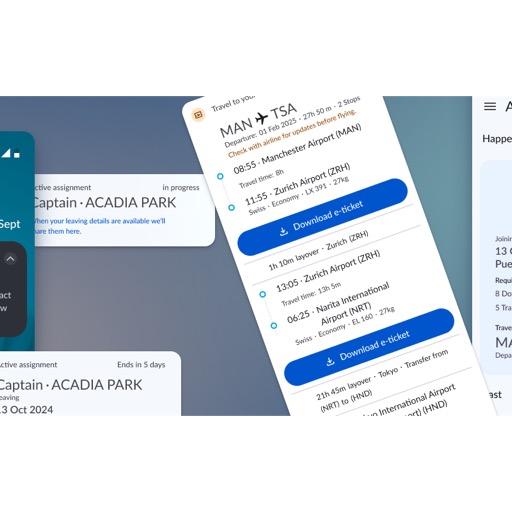
First and foremost, our designers are embedded in cross-functional product streams. This is where they live day-to-day, sitting alongside their partners in product and engineering. It ensures they are deeply immersed in the gnarly, complex problems of their specific domain, whether that’s crewing logistics or vessel performance.
Connected in the Design Chapter
While a designer works in a stream, they belong to the Design Chapter—their professional home. It is where we protect our craft, hold tough, honest design critiques, maintain our design system, and define career progression for designers, as designers.
It kills the two great plagues of a scaling design team in a single move: designer isolation and inconsistency creep.
Now, it’s easy to get hung up on who a designer’s ‘manager’ is on paper, especially when the HR system insists it can only be one person. The way I view it is simple. Our Heads of Product manage the administrative side: the holiday requests and ensuring the designer is focused on the right design challenges for their stream. My job, as the chapter lead, is to look after their long-term growth, our design culture, and the systems that allow all our designers to work together as a cohesive team, ultimately ensuring we are all aligned and swimming in the right direction.
Frankly, who gets to click the ‘approve holiday’ button is pretty low down my list of things I care about when it comes to making design great at 90POE.
So, you can stop the civil war. You can have your cake and eat it too. You just have to be willing to architect a system that is as thoughtful as the products you expect your team to build.
How does your organisation structure design?
How does your organisation structure its design team? I’m keen to hear about other models and the trade-offs you’ve had to make.