The Next One-Way Door
# Why AI Won’t Replace Designers, But It Will Expose Bad Ones
In 30 seconds
AI automates the superficial.
Utopians and dystopians are both wrong. AI won’t take your job—but it will make it ruthlessly obvious whether you’re any good at it.
Generating variations, resizing assets, and choosing icons are the exact parts machines will do faster.
Designers who only turn tickets into screens without understanding “why” will be left behind.
Empathy, stakeholder navigation, taste, and reframing the problem remain uniquely human.
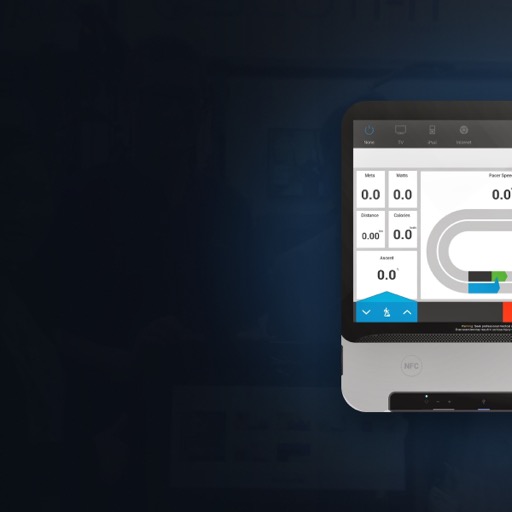
The first user interface I ever designed was for a treadmill. This was in the early naughties, by most people's measures, this was a very long time ago. I was working as a product designer at Pulse Fitness, and at the time, what I knew about "UX," you could probably write on an envelope, in fact when I think of it, I probably didn't even know the term UX. My only tools were a sketch pad, a copy of Photoshop and a dangerously loose brief from my design manager, who for reasons unknown to me had bestowed upon me an unbelievable amount of trust and freedom.
When you start your career like that, designing a complex, safety-critical interface with what are, by today's standards, Stone Age tools, you see a lot of change. I’ve seen empires like Sketch rise and fall. I’ve watched Adobe’s botched attempts to muscle in with XD and its spectacular failure to buy Figma. And as a community, we love to lap it up, debating plugins and performance as if they're the most important part of our job.
And now, a new emperor has arrived. A great, job-destroying monster called Artificial Intelligence. And once again, we are all collectively losing our minds.
The current debate is a tedious tug-of-war between two equally boring camps. On one side, you have the utopians, who believe AI will free us from all tedious work, leaving us to frolic in sun-drenched fields of pure creativity. On the other, you have the dystopians, who believe we are just a few software updates away from being replaced entirely by a line of code.
Both are wrong. The truth is far more interesting, and far more brutal.
AI is not going to take your job. However, it is about to make it ruthlessly, uncomfortably obvious whether you are any good at it.
What AI cannot do
For years, we designers have complained about being seen as the "colouring-in department." We've been frustrated by stakeholders who think our value is condensed into "choosing some icons." Well, congratulations. The part of our job that so many people think is our entire job… generating variations, resizing assets, creating perfectly spaced layouts, and yes, choosing icons…. is precisely the part that the machines will soon do better, faster, and cheaper than any human ever could.
AI is about to automate the superficial. And that is a terrifying prospect for anyone whose value is superficial.
This is the next great "one-way door" for our profession. As we discussed in "The Industrial Designer's Ghost," these are the irreversible decisions you can't go back through. Once we automate the low-level craft of pushing pixels, we can never go back. The value of a designer will no longer be measured by their speed in the tools, but by the quality of their thinking.
The designers who will be exposed are the ones who are little more than human routers, taking a ticket from a product manager and outputting a screen. The ones who are great at the "what" but have no idea about the "why."
The designers who will thrive, however, are the ones whose real work was never about the pixels in the first place. AI cannot:
Sit with a sleep-deprived Chief Officer and understand the “pressure cooker” environment that leads him to make a critical error.
Navigate the complex human and political dynamics of a stakeholder meeting to get to the real, unspoken business problem.
Apply taste, judgment, and a deep understanding of the user’s context to make a brave, opinionated design choice.
Ask the one stupid question in a room full of clever people that completely reframes the entire problem.
These are the skills of a truly great designer. They are skills of critical thinking, empathy, and strategic influence. And they are, for the foreseeable future, uniquely human.
And this isn't just a theoretical debate for me. It's personal.
My daughter has just completed her first year as an undergraduate studying art and animation. Some of her work is truly inspiring, grounded in the timeless skills of hand drawing and narrative. But her entire chosen craft is threatened by this new technology. When I mention that I've used AI to help build a prototype or write some developer hand-off notes, it can send her into an anxious spiral. And I get it. It's hard to know what the lay of the land will look like in five years, let alone twenty. And that is a sobering thought for anyone, especially a young person considering taking on a lifetime of debt to study for a future that feels so uncertain.
So, the challenge isn't to learn how to write the perfect prompt to generate a dozen variations of a blue button. It's to become the person who knows, with absolute certainty, whether we should be building a button at all.
AI won't take your job. But a designer who knows how to leverage AI to amplify their strategic thinking certainly will.
What uniquely human skill matters most?
What's the one uniquely human skill you believe will become more valuable for designers in an age of AI?